
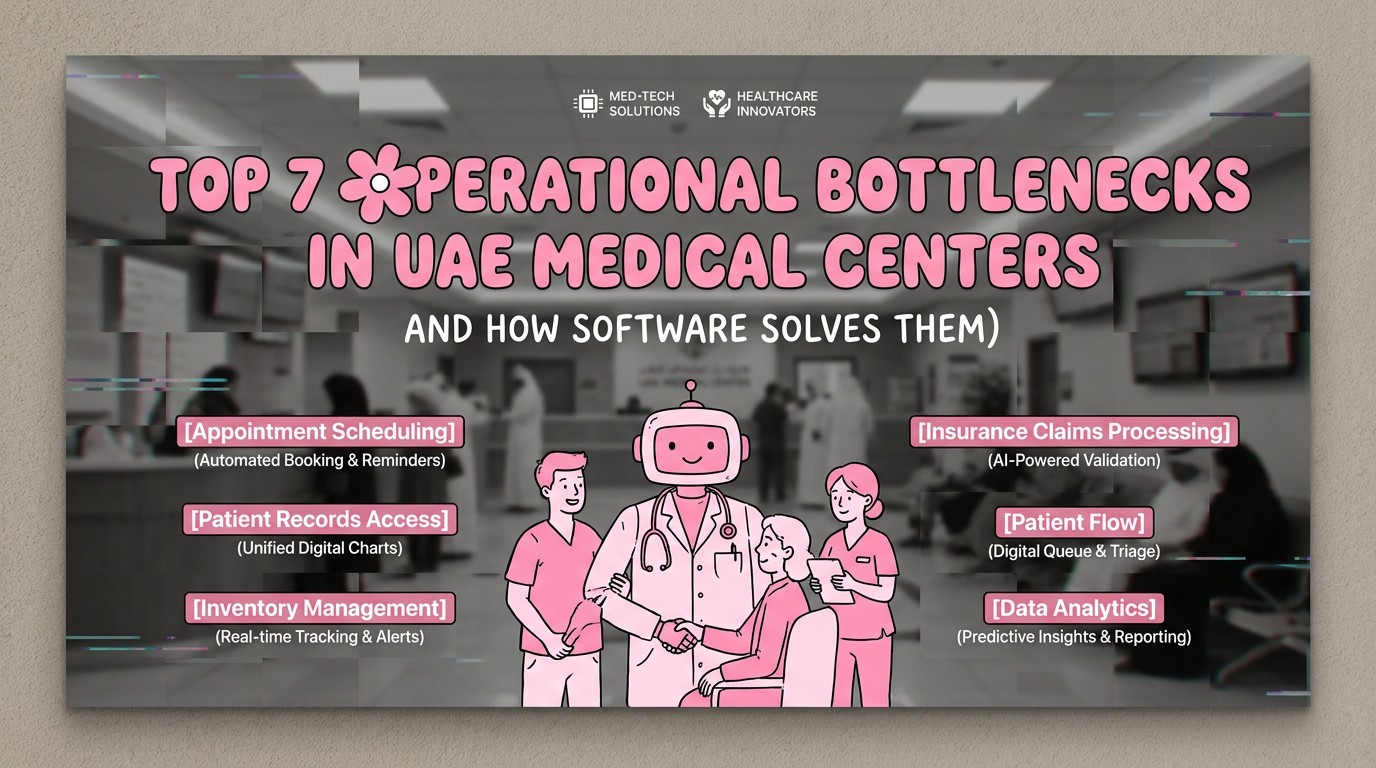
Operating a healthcare practice in the UAE presents a unique blend of high patient expectations, rapid technological innovation, and strict regulatory standards. As medical centers scale across Dubai, Abu Dhabi, and the Northern Emirates, administrative complexities often choke day-to-day productivity.
When operational bottlenecks persist, they drain revenue, burn out healthcare staff, and degrade the patient experience. Fortunately, intelligent healthcare software solutions are transforming how medical centers manage daily workflows.
1. Long Front-Desk Wait Times & Registration Delays
Manual patient intake creates massive front-desk congestion. Collecting demographic details, verifying insurance cards, and re-keying personal information manually leads to long queues and delayed appointments.
-
How Software Solves It: Modern clinic management systems feature Emirates ID integration. With a quick swipe of an Emirates ID card, patient profiles auto-populate instantly into the Electronic Medical Record (EMR) system. Combined with automated self-service check-in kiosks or pre-visit digital intake forms, front-desk check-in times are cut from minutes to seconds.
2. High Insurance Claim Denial Rates
Insurance pre-authorizations and e-claim submissions are constant headaches for UAE medical billing teams. Minor coding discrepancies, missing documents, or manual errors during submission lead to delayed reimbursements, rejected claims, and cash flow bottlenecks.
-
How Software Solves It: Advanced EMR platforms automate e-claim submissions and pre-authorization workflows aligned directly with local health insurance frameworks. Built-in claim scrubber tools validate billing codes, attach necessary diagnostic records, and flag errors before submission—significantly increasing first-pass approval rates.
3. Regulatory Data Compliance & Reporting Friction
Complying with mandatory health data exchange frameworks—such as NABIDH in Dubai, Malaffi in Abu Dhabi, and Riyati under the Ministry of Health and Prevention (MOHAP)—requires rigorous digital record-keeping. Medical centers relying on legacy systems or fragmented software face compliance penalties and cumbersome monthly reporting.
-
How Software Solves It: Fully certified clinic management systems provide seamless integration with NABIDH, Malaffi, and Riyati. Patient medical files, diagnostic reports, and visit summaries automatically upload to regulatory central databases in real time, while built-in analytics generate one-click authority-ready statistics reports.
4. Patient Appointment No-Shows & Scheduling Conflicts
Unconfirmed appointments and double bookings create empty slots that disrupt doctor schedules and waste clinical resources. Without an automated notification system, clinic staff waste hours manually placing phone calls to confirm schedules.
-
How Software Solves It: Centralized appointment schedulers automatically trigger automated SMS and WhatsApp appointment reminders. Patients can confirm, reschedule, or cancel with a single tap, allowing the software to instantly open available slots to waiting patients and keep doctor calendars fully optimized.
5. Slow Prescription Processing & Pharmacy Bottlenecks
Handwritten or un-integrated prescriptions cause friction between practitioners and pharmacies. Patients endure long waiting periods at the clinic dispensary while pharmacists decipher doctor notes and check drug-to-drug interactions manually.
-
How Software Solves It: Integrated E-Prescription modules allow doctors to generate digital prescriptions directly within the patient’s EMR file. Prescriptions are electronically transmitted to the in-house or partner pharmacy in real-time, complete with automated dosage alerts and inventory updates, ensuring patient safety and rapid fulfillment.
6. Inventory Leakage & Stock Management Inefficiencies
Managing medical supplies, pharmaceuticals, and consumables manually often leads to stockouts, overstocking, or inventory leakage due to untracked usage during treatments.
-
How Software Solves It: Healthcare ERP and inventory modules track stock levels down to individual batch numbers and expiration dates. Whenever a doctor documents a procedure or dispenses medicine, inventory updates automatically. Automated reorder alerts prevent stockouts of critical supplies while eliminating inventory shrinkage.
7. Fragmented Departmental Workflows & Siloed Data
When medical records, billing accounts, laboratory results, and reception data operate on separate platforms, staff spend excess time transferring information manually. This lack of centralized data slows down patient care and leads to miscommunication.
-
How Software Solves It: A unified, cloud-based clinic management solution establishes a single source of truth across all departments. Multi-user, role-based access allows receptionists, nurses, doctors, lab technicians, and accountants to collaborate in real time while maintaining strict data privacy.
Simplify Your Clinic Operations with Topline IT Solutions
Overcoming these operational bottlenecks requires a robust, scalable technology platform built specifically for the Middle Eastern healthcare landscape. Topline IT Solutions provides industry-leading clinic management software, including Tablet 7 and Tablet 10, tailored for small medical practices, dental clinics, and large polyclinics across Dubai and the UAE. Fully approved by DHA, DOH/HAAD, and MOH, Topline’s clinic software offers seamless NABIDH and Riyati integration, Emirates ID registration, e-claim automation, and cloud-based EMR features designed to eliminate administrative burdens and elevate patient care. To digitize your facility and achieve a paperless workflow, visit Topline IT Solutions today.


